
7 Warning Signs Your Garage Door Needs Repair
By KSE Garage Door Services Editorial Team · 4 min read
Answer: If your door makes loud noises, moves unevenly, reverses unexpectedly, shows visible cable or spring damage, has dented panels, the opener malfunctions, or sensors fail alignment, it needs repair.
These are not cosmetic issues only. A problem with balance, cables, springs, or the opener can lead to a sudden failure that risks property damage or injury. Read on for what each sign means, what you can check safely, and when a professional should take over.
TL;DR
- Unusual noises, uneven movement, and visible cable or spring damage are top garage door repair warning signs.
- Do basic safety checks yourself, but avoid operating a door with frayed cables or broken springs.
- Repair costs depend on parts, labor complexity, and whether panels or the opener need replacement.
- Prepare by documenting the problem and clearing the workspace to speed up diagnostics.
Clear warning signs and what to do first
If you notice any of the following behaviors, act quickly but safely. These signs indicate mechanical or electrical faults that can worsen or create hazards.
- Loud grinding, squealing, or banging
Stop using the door and inspect for loose hardware or worn rollers; schedule a professional inspection if noises persist. - Door moves unevenly or lopsided
Do a balance test and check cables visually; an off-level door often means spring or cable problems needing repair. - Door reverses or stalls when closing
Check sensor alignment and track obstructions; if sensors are fine, opener force or springs may need adjustment. - Visible frayed cables or a snapped spring
Do not operate the door; these are immediate safety hazards that require technician attention. - Panels are dented, warped, or separated
Assess whether panels can be replaced or if the door needs replacement; damaged panels can affect balance and security. - Remote or keypad stops working
Test batteries and reprogram; persistent electrical issues suggest opener motor or circuit faults.
1. Loud, new, or changing noises
What you hear matters. Squealing can point to dry rollers or hinges. Grinding or banging often means worn bearings, loose hardware, bent tracks, or failing opener gears. A sudden change from a smooth operation to noisy motion should be investigated right away.
What to check safely:
- Test open and close while standing to the side, not directly beneath the door
- Listen for where the sound comes from: top, sides, or opener unit
- Tighten visibly loose nuts or bolts if you are comfortable with basic tools
If noises persist after lubrication and tightening, call a technician. Internal opener gear failure and damaged springs can cause noisy, erratic behavior and are best handled by a pro.
2. Door moves unevenly or gets stuck partway
A door that tilts, drifts to one side, or stops mid-cycle usually indicates an imbalance. Common causes include worn springs, unequal spring tension, broken cables, or track misalignment.
Home check you can do:
- Disconnect the opener by pulling the manual release cord, then manually lift the door about halfway and let go briefly. A balanced door should stay in place or move very slowly.
Factors that affect repair cost
Costs vary by part, labor, and whether the door is residential or commercial. These are the key factors technicians consider when estimating repairs.
Springs and cables are cheaper than new panels or a complete opener replacement.
Working with high-lift tracks, heavy panels, or commercial systems increases labor time.
Older or specialty doors require harder-to-find parts or more adjustments.
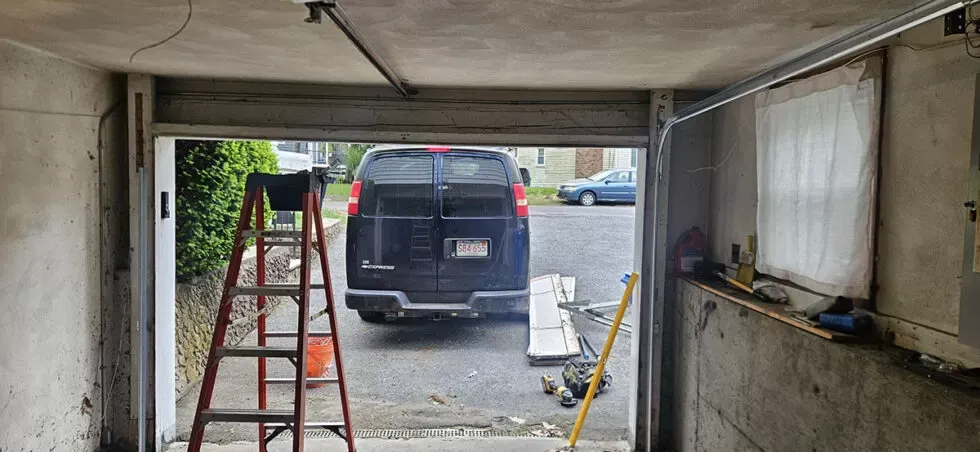
Accident damage (vehicle strikes) often requires panel replacement and realignment; routine wear often needs tune-up.
3. Door reverses or stalls when closing
If the door starts to close then reverses, or the motor stalls before reaching the floor, sensors or force settings are usual suspects. Blocked, dirty, or misaligned photo-eye sensors trigger reversal as a built-in safety feature.
Quick sensor check:
- Look for the two small sensor heads mounted near the bottom of the door tracks. They usually have LEDs; when aligned and clear they light steadily.
- Wipe lenses clean and remove cobwebs or debris.
If sensor cleaning and alignment do not fix the issue, the opener force setting, worn gear inside the opener, or spring problems may be causing the stall. These require professional adjustment.
4. Visible frayed cables or broken springs
These are immediate red flags. Frayed cables and snapped springs are under extreme tension and can cause serious injury if mishandled.
Do not operate the door if you see frayed cables, loose coils, or a visibly broken spring. Keep clear of the door and arrange for a trained technician to assess and repair the system. Tightening or replacing these components without the right tools and experience is unsafe.
Quick checklist to prepare before a technician arrives
Following these steps saves diagnostic time and helps the technician prioritize repairs.
- Note exactly when symptoms started and any events that coincided, like storms or impacts
- Remove vehicles and clear the area around the garage door both inside and outside
- Test the door briefly to reproduce the problem, but stop if cables or springs are damaged
- Have model numbers or photos of the opener and door panels available if possible
- Secure pets and children away from the garage area while a technician works
5. Dented, warped, or separated panels
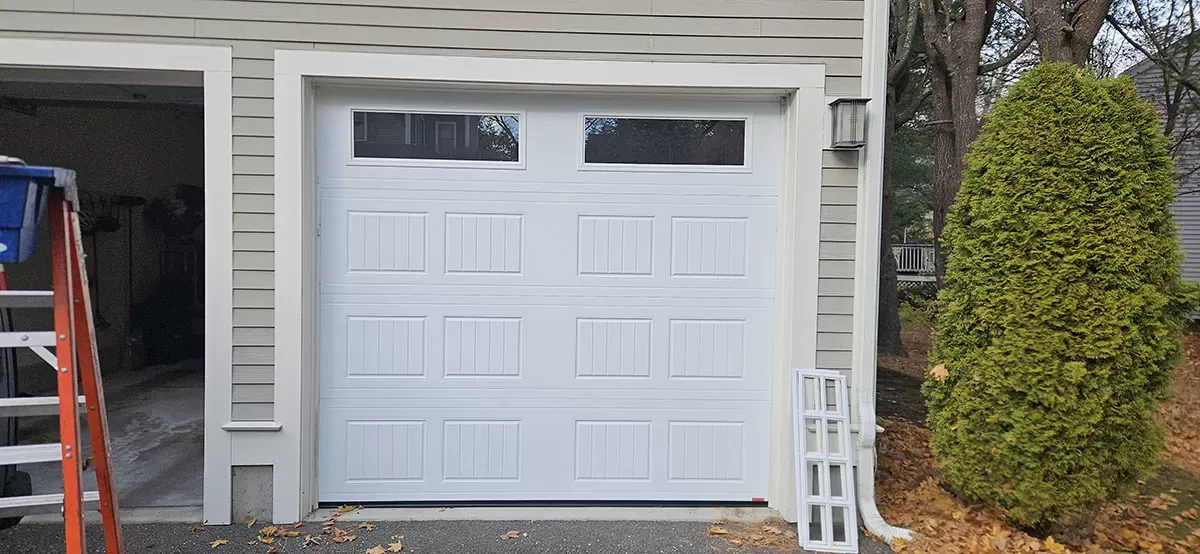
Damaged panels affect the door’s structural integrity and balance. Even small dents can prevent smooth operation if they rub the track or change the way the door seals.
If damage is limited to a panel, a replacement panel may restore appearance and function. For large or multiple panel damages, replacement of the entire door may be more cost effective. A technician can advise after inspection. For examples of panel repairs, see the company’s Garage Door Panel Replacement.
6. Opener not responding or motor issues
If remotes, keypad, or wall switch fail to operate the opener, start with batteries and power. If the opener hums but the door does not move, gear or motor problems may be present.
When electrical troubleshooting does not restore function, the opener may need repair or replacement. For opener upgrades and installations, see Garage Door Opener Installation.
When to call a professional and what to expect
Call a professional if you observe frayed cables, broken springs, off-track doors, persistent loud noises after basic checks, or electrical failures you cannot isolate. Technicians use tools and safety procedures not available to most homeowners.
A specialist will inspect balance, spring condition, cable integrity, track alignment, opener settings, and sensors. If the door is off its tracks, it usually requires a trained team to realign and secure the system safely. For off-track situations, see an example repair offering here: Off-Track Garage Door Repair.
Local note: In Framingham MA, salt and seasonal temperature swings can speed wear on metal parts. Regular spring and hardware checks help reduce emergency failures.
Preventive steps you can do every 6 months
- Lubricate rollers, hinges, and springs with a light garage-door lubricant
- Tighten loose hardware and check for bent tracks
- Test sensor alignment and clean lenses
- Run a manual balance test after disconnecting the opener
- Replace worn weatherstripping to prevent moisture intrusion
Keeping a short maintenance log with dates and observations helps technicians diagnose recurring issues faster.
Final practical advice
Address warning signs early to avoid larger repairs or safety hazards. Do basic, noninvasive checks yourself, but always stop and call a professional when you see frayed cables, broken springs, off-track movement, or significant panel damage. Document symptoms and clear the work area before a technician arrives to speed repairs and reduce cost.
Frequently asked questions
How do you know if your garage door motor needs to be replaced?
Signs the motor may need replacement include unusual grinding or burning smells from the opener, the opener running but not moving the door, frequent motor overheating, and repeated failures after repairs. A technician will test the motor, drive gear, and circuit board to determine if repair or replacement is the cost-effective choice.
How can you tell if garage door sensors are aligned?
Aligned sensors usually display a steady light on both sensor heads. If one LED is off or blinking, the sensors are likely misaligned or blocked. Clean the lenses, remove obstructions, and gently adjust the sensor housings until the LEDs show steady light. If that does not restore function, wiring or sensor failure may be the cause.
What is the average cost to replace a garage door opener?
Costs vary by motor type, horsepower, and features. Basic belt or chain drive openers cost less than higher-end models with smart controls or battery backup. For a specific estimate relative to your door and usage, a technician can recommend compatible models and provide a quote.
What is the average lifespan of a garage door?
A typical residential garage door lasts 15 to 30 years depending on material, maintenance, and exposure to the elements. Regular upkeep, such as lubrication and hardware inspections, extends service life. Heavy damage or repeated mechanical failures may warrant replacement sooner.
Ready to get started? Contact KSE Garage Door Services today.